Jupiter, Ketu & Mars Conjunction 2026–2027: Effects on All 12 Ascendants
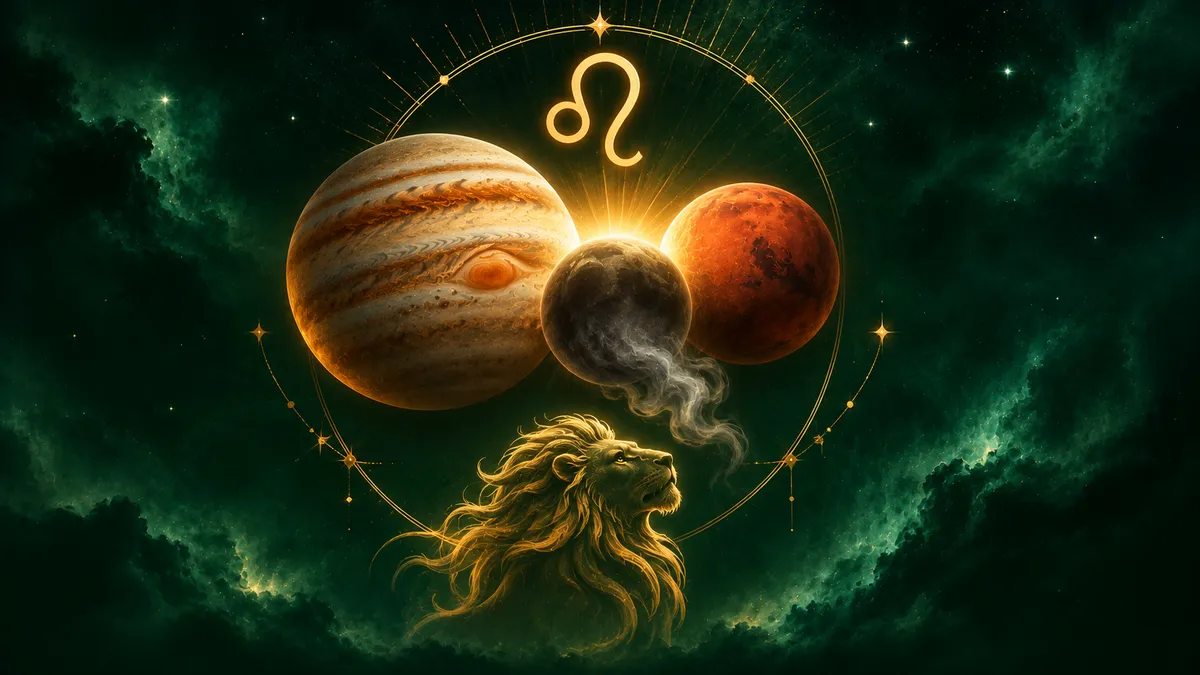
One of the particularly interesting planetary combinations of 2026–2027 is the conjunction of Jupiter, Ketu and Mars. What makes this combination unusual is that it occurs in two different signs within a relatively short period. The first phase takes place in Leo in November and December 2026, while the second occurs in Cancer during March and April 2027. The two phases bring together the same three planets, but the signs, nakshatras and planetary dignities are different, creating two distinct expressions of the combination.
Jupiter represents wisdom, expansion, knowledge, guidance and higher understanding. Ketu signifies detachment, spiritual insight, past karma and the desire to move beyond excessive worldly attachments. Mars represents courage, initiative, ambition, competition and decisive action. When these three planets come together, the combination brings together the desire to understand, the impulse to act and the need to detach from certain expectations. The results depend considerably on the sign occupied, the house activated and the condition of the planets in the individual birth chart.
The Leo phase occurs in Magha Nakshatra, ruled by Ketu, while the Cancer phase occurs in Ashlesha Nakshatra, ruled by Mercury. Jupiter is in a friendly sign in Leo and exalted in Cancer. Mars is in a friendly sign in Leo but debilitated in Cancer. The sign lord also changes from the Sun to the Moon. These distinctions are essential to understanding why the two phases should not be interpreted in exactly the same way.
1. When Does the Jupiter, Ketu and Mars Conjunction Occur?
Using the Lahiri sidereal zodiac and mean-node calculation, the planetary sequence is as follows:
| Planetary Event | Approximate Date |
|---|---|
| Jupiter enters Leo and joins Ketu | 31 October 2026 |
| Jupiter and Ketu meet exactly in Leo | 12 November 2026 |
| Mars enters Leo | 12 November 2026 |
| Mars meets Ketu in Leo | 15 November 2026 |
| Mars meets Jupiter in Leo | 16 November 2026 |
| Ketu enters Cancer | 5 December 2026 |
| Jupiter returns to Cancer | 25 January 2027 |
| Jupiter and Ketu meet in Cancer | Around 1 March 2027 |
| Mars returns to Cancer retrograde | 10 March 2027 |
| Mars turns direct in Cancer | Around 1–2 April 2027 |
| Jupiter and Ketu meet again in Cancer | Around 20 April 2027 |
| Mars leaves Cancer | 26 April 2027 |
| Jupiter leaves Cancer | 26 June 2027 |
First Phase: Leo, November–December 2026
Jupiter enters Leo on 31 October and joins Ketu. Mars enters Leo on 12 November, bringing all three planets together in the early degrees of the sign. The conjunction becomes particularly close around 14–16 November. On 14 November, all three are within approximately one degree of one another. They occupy Leo together until Ketu moves into Cancer on 5 December.
Second Phase: Cancer, March–April 2027
Jupiter returns to Cancer on 25 January and joins Ketu again. Mars, which has moved into Leo and subsequently turned retrograde, returns to Cancer on 10 March. All three then occupy Cancer together until Mars leaves on 26 April. Jupiter and Ketu have close degree-based conjunctions around 1 March and 20 April. Mars approaches this group closely during its retrograde movement and around its direct station in early April, although the three planets should not be described as reaching the exact same degree simultaneously.
The distinction between a sign conjunction and an exact degree conjunction is important. The three planets occupy the same sign during both phases, but their precise degree relationships change throughout the period.
2. The First Phase: Jupiter, Ketu and Mars in Leo
The first phase takes place in Leo, a fixed fire sign ruled by the Sun. Leo represents authority, leadership, confidence, recognition, administration, creativity and the desire to establish one’s identity. Jupiter and Mars are both in a friendly sign, while Ketu introduces detachment and introspection. This creates a combination that can bring attention to leadership, ambition, personal authority, knowledge and the responsible use of influence.
The conjunction occurs in Magha Nakshatra, which is ruled by Ketu and associated with ancestral lineage, heritage, authority and the royal throne. Magha carries a strong connection with tradition, family legacy, established positions and the responsibilities that come with power. Jupiter’s association with Ketu can encourage a reassessment of beliefs, teachers, inherited values and traditional sources of guidance. Mars adds courage and the desire to act, potentially making this a period when people feel motivated to challenge existing structures or establish a more independent position.
Jupiter’s presence can provide perspective and a desire to act according to principles, while Mars brings initiative and Ketu can reduce attachment to conventional recognition. The combination may therefore encourage people to reconsider what leadership and achievement actually mean. However, there can also be tension between authority and independence, particularly when personal ambitions conflict with established expectations. The Sun, as the dispositor of all three planets in Leo, becomes particularly important. Its natal condition and its relationship with the conjunction will help determine how these themes manifest.
3. The Second Phase: Jupiter, Ketu and Mars in Cancer
The second phase takes place in Cancer, a movable water sign ruled by the Moon. The themes shift considerably from the Leo phase. Cancer represents the mind, emotional security, family, mother, home, property, nourishment and domestic stability. Jupiter is exalted in Cancer, bringing its qualities of wisdom, protection, guidance and expansion into a sign associated with nurturing and emotional understanding.
Ketu’s presence creates a more introspective influence. It can bring a reassessment of family attachments, domestic circumstances and the emotional patterns through which people seek security. Jupiter’s exaltation may support a more thoughtful understanding of these matters, encouraging spiritual learning, compassion and a broader perspective. This is particularly relevant because Jupiter and Ketu meet closely twice during their stay in Cancer.
Mars, however, is debilitated in Cancer. Its natural qualities of aggression, initiative and decisive action can become more emotionally influenced in this sign. There may be a stronger tendency to react when family, personal security or emotional expectations are involved. Mars returns to Cancer while retrograde and moves towards its direct station in early April, creating a concentrated period in which its energy is particularly relevant to the conjunction.
All three planets occupy Ashlesha Nakshatra during their Cancer association. Ashlesha is ruled by Mercury and associated with psychological depth, hidden patterns, emotional entanglements and the ability to understand what lies beneath the surface. The Moon, as the sign lord, and Mercury, as the nakshatra lord, therefore become important to the interpretation. The combination can encourage deeper investigation and emotional understanding, but it also calls for care around impulsive decisions, suspicion and complicated family or financial matters.
The contrast between the two phases is significant. Leo brings attention to authority, identity and recognition, while Cancer brings attention to emotional security, family and inner stability. The same three planets operate through two very different environments, so the house occupied by each sign in the birth chart must be considered separately.
4. Understanding the Three Planets in Combination
Jupiter, Ketu and Mars do not naturally operate in the same way. Jupiter seeks knowledge, expansion and understanding. Ketu encourages detachment, introspection and the questioning of established expectations. Mars wants action, achievement and the ability to overcome resistance. Their association can therefore produce a mixture of strong ambition, philosophical questioning and a desire to make decisive changes.
Jupiter’s conjunction with Ketu is traditionally associated with a reassessment of belief systems, teachers, spiritual principles and the nature of knowledge. It can encourage a person to move beyond superficial understanding and seek deeper meaning. Mars adds the impulse to act on these insights, but it can also make the process more forceful. Whether the combination becomes constructive or difficult depends on the dignity of the planets, the houses involved and the strength of their dispositors.
The two phases also have different planetary dignities. In Leo, Jupiter and Mars occupy a friendly sign ruled by the Sun. In Cancer, Jupiter is exalted but Mars is debilitated. It would therefore be inaccurate to interpret the Cancer phase simply as a stronger or more favourable version of the Leo phase. Jupiter’s strength can support understanding and protection, but Mars’s debilitation requires attention to emotional reactions and the way actions are carried out.
5. The Importance of the Sun and Moon as Dispositors
The Sun is the dispositor of the Leo conjunction, while the Moon is the dispositor of the Cancer conjunction. Their natal condition becomes important because they provide the underlying environment through which the three planets express themselves.
For the Leo phase, the Sun represents authority, confidence, leadership, reputation and personal identity. A well-supported Sun can help channel the combination towards constructive leadership, purposeful action and the responsible use of influence. If the Sun is afflicted or poorly placed, issues involving ego, recognition, authority or disagreements with people in positions of power may become more prominent.
For the Cancer phase, the Moon represents the mind, emotional responses, family, mother, nourishment and inner security. Its condition can influence whether the conjunction is experienced through greater emotional understanding or through uncertainty and reactivity. A well-supported Moon may help provide stability, while a challenged Moon can make it more difficult to manage the emotional intensity of the combination.
The nakshatra rulers add another layer. Ketu rules Magha in the Leo phase, while Mercury rules Ashlesha in the Cancer phase. The Sun and Moon therefore provide the sign-based framework, while Ketu and Mercury modify the expression of the conjunction through the respective nakshatras.
6. Effects for All 12 Ascendants
The following interpretations consider both phases of the conjunction. Leo and Cancer activate different houses for every ascendant, so the two periods may bring attention to different areas of life.
| Ascendant | Leo Conjunction | Cancer Conjunction |
|---|---|---|
| Aries | 5th house | 4th house |
| Taurus | 4th house | 3rd house |
| Gemini | 3rd house | 2nd house |
| Cancer | 2nd house | 1st house |
| Leo | 1st house | 12th house |
| Virgo | 12th house | 11th house |
| Libra | 11th house | 10th house |
| Scorpio | 10th house | 9th house |
| Sagittarius | 9th house | 8th house |
| Capricorn | 8th house | 7th house |
| Aquarius | 7th house | 6th house |
| Pisces | 6th house | 5th house |
Aries Ascendant
For Aries Ascendant, the Leo conjunction activates the fifth house of education, intelligence, creativity, children, romance and speculation. Jupiter’s presence may support learning, intellectual development and the pursuit of creative or educational goals. Ketu can create a more introspective approach to knowledge, while Mars, as the ascendant lord, adds personal involvement and the desire to take initiative. This can be a period of renewed interest in education, creative projects or developing a specialised skill, although speculative decisions and emotionally driven romantic choices should be approached carefully.
When the conjunction moves to Cancer in March 2027, the focus shifts to the fourth house of home, property, mother and emotional security. Jupiter’s exaltation can support education, domestic development and a broader understanding of family responsibilities. Ketu may bring a reassessment of attachment to familiar surroundings, while Mars’s debilitation can make domestic matters more emotionally sensitive. Rahu’s transit through the tenth house creates a wider connection between career ambitions and family life. The central theme across the two phases is balancing personal development and professional ambition with the need for emotional stability.
Taurus Ascendant
For Taurus Ascendant, the Leo conjunction takes place in the fourth house of home, property, family, mother and emotional security. Jupiter can bring attention to domestic development, property matters and family responsibilities. Ketu may encourage a more detached approach to familiar surroundings, while Mars can create a desire to make changes at home or take decisive action regarding property. Important domestic and financial decisions should be made after careful consideration rather than in response to temporary dissatisfaction.
The Cancer conjunction activates the third house of courage, communication, siblings, initiative and practical skills. Jupiter may encourage learning and the development of communication abilities, while Ketu can create a more selective approach to social interaction. Mars adds initiative, but its debilitation may make conversations more emotionally charged. Relationships with siblings and close relatives may require patience. Rahu in the ninth house creates a contrast between independent effort and higher learning, beliefs and long-distance opportunities. This combination encourages personal initiative supported by thoughtful communication.
Gemini Ascendant
For Gemini Ascendant, the Leo conjunction occupies the third house of communication, courage, siblings, initiative and skills. Jupiter can support learning, writing, teaching and the development of practical abilities. Ketu may encourage independent thinking and a more selective approach to communication, while Mars adds competitiveness and the desire to pursue personal projects. This can be useful for developing skills and taking initiative, provided that communication remains measured and unnecessary disagreements are avoided.
When the conjunction moves into Cancer, it activates the second house of wealth, savings, family, speech and personal values. Jupiter may encourage a more thoughtful approach to financial security and family responsibilities. Ketu can create detachment from material expectations, while Mars may make financial discussions more emotionally charged. Care is needed with savings, investments and family arrangements. Rahu in the eighth house brings additional attention to shared resources, taxes, inheritance and financial obligations. The central lesson is to maintain clear financial priorities and thoughtful communication.
Cancer Ascendant
For Cancer Ascendant, the Leo conjunction takes place in the second house of accumulated wealth, family, speech, savings and personal values. Jupiter may encourage financial planning and a broader understanding of family responsibilities. Ketu can create a reassessment of material attachments, while Mars adds a forceful influence to speech and financial decisions. It is important to avoid impulsive spending or allowing family disagreements to escalate through harsh communication.
The Cancer conjunction then moves into the first house of identity, personality, physical presence and personal development. This is a particularly significant phase because the conjunction occupies the ascendant itself. Jupiter is exalted in Cancer and can encourage personal growth, learning and spiritual understanding. Ketu may create detachment from an established identity, while debilitated Mars can make personal reactions more emotional. The Moon, as ascendant lord and dispositor of the conjunction, becomes especially important. Rahu in the seventh house brings relationships and partnerships into focus, creating a need to balance personal development with mutual understanding and commitment.
Leo Ascendant
For Leo Ascendant, the first phase occurs directly in the first house of identity, personality, self-direction and personal development. Jupiter can encourage confidence, learning and a broader understanding of personal goals. Ketu may create detachment from external recognition or a desire to redefine one’s identity, while Mars adds initiative and determination. Since the conjunction occurs in Leo, the Sun’s natal condition becomes particularly important. There may be a strong desire to establish a new direction, but it is important to distinguish genuine personal growth from decisions driven by ego or temporary dissatisfaction.
The second phase takes place in the twelfth house of foreign countries, expenditure, isolation, sleep and spiritual practice. Jupiter’s exaltation may encourage spiritual study, charitable activities and foreign connections. Ketu can increase the desire for solitude, while Mars’s debilitation may make expenditure or decisions involving personal space more emotionally influenced. Rahu in the sixth house creates a contrast between withdrawal and daily responsibilities. The central theme is to balance personal ambition with reflection, rest and responsible management of resources.
Virgo Ascendant
For Virgo Ascendant, the Leo conjunction occupies the twelfth house of expenditure, foreign connections, isolation, sleep, retreats and spiritual development. Jupiter may encourage spiritual learning, travel or involvement in activities away from familiar surroundings. Ketu can strengthen introspection and detachment, while Mars may increase expenditure or create restlessness. Financial planning and healthy daily routines are important during this phase.
When the conjunction moves to Cancer, it activates the eleventh house of income, gains, friendships, professional networks and ambitions. Jupiter can support opportunities through influential people and professional associations. Ketu may make a person more selective about friendships, while Mars can bring competitiveness into social or professional relationships. Rahu in the fifth house creates an emphasis on creativity, education, romance and personal achievement. This is a period to reassess ambitions and networks, focusing on meaningful opportunities rather than pursuing recognition for its own sake.
Libra Ascendant
For Libra Ascendant, the Leo conjunction takes place in the eleventh house of income, gains, friendships, professional networks and fulfilment of ambitions. Jupiter may support financial growth and opportunities through professional associations. Ketu can encourage a more selective approach to social connections, while Mars adds initiative and competitiveness. It is important to assess opportunities carefully and avoid allowing disagreements over recognition or financial matters to affect valuable relationships.
The Cancer conjunction activates the tenth house of career, reputation, authority and professional responsibilities. Jupiter’s exaltation may support professional learning, guidance and a reassessment of long-term ambitions. Ketu can create detachment from conventional measures of success, while Mars may encourage decisive career action, although its debilitation can make professional decisions more emotionally influenced. The Moon rules the tenth house and becomes the dispositor of the conjunction. Rahu in the fourth house creates a connection between career and domestic life. The central theme is to seek meaningful professional progress while maintaining stability at home.
Scorpio Ascendant
For Scorpio Ascendant, the Leo conjunction occupies the tenth house of career, profession, authority and public reputation. Jupiter may support professional development, learning and leadership, while Ketu can create a reassessment of career ambitions. Mars, the ascendant lord, adds personal drive and the desire to take action. However, professional decisions should be based on long-term considerations rather than the need to challenge authority or secure immediate recognition.
The Cancer conjunction moves into the ninth house of higher education, philosophy, religion, teachers, long-distance travel and fortune. Jupiter is exalted in this house, potentially encouraging spiritual learning, higher education and a broader understanding of personal principles. Ketu may create a more independent approach to beliefs, while Mars can make discussions involving teachers, mentors or family principles more emotionally charged. Rahu in the third house emphasises independent effort and communication. This combination encourages deeper learning and the development of personal convictions through experience and reflection.
Sagittarius Ascendant
For Sagittarius Ascendant, the Leo conjunction takes place in the ninth house of higher education, philosophy, religion, teachers and long-distance travel. Jupiter, as ascendant lord, is particularly important here and can support learning, spiritual development and the pursuit of knowledge. Ketu may encourage questioning of established beliefs, while Mars adds the desire to act on personal convictions. Relationships with teachers and mentors may be reassessed, and it is important to remain open to different perspectives rather than becoming overly attached to one’s own position.
The Cancer conjunction activates the eighth house of transformation, joint finances, inheritance, taxes, insurance and psychological understanding. Jupiter’s exaltation may support research and deeper learning, while Ketu encourages introspection and detachment from old patterns. Mars can bring a desire to confront complicated matters, but its debilitation requires care around emotionally sensitive financial or relationship issues. Rahu in the second house brings attention to personal wealth, savings and family resources. This is a period for careful financial organisation and a deeper understanding of shared responsibilities.
Capricorn Ascendant
For Capricorn Ascendant, the Leo conjunction occupies the eighth house of transformation, joint finances, inheritance, taxes, research and hidden matters. Jupiter may support research and a deeper understanding of complex situations. Ketu can encourage detachment from old patterns, while Mars may bring a desire to address unresolved matters directly. Financial arrangements involving other people should be handled transparently, particularly where loans, investments or shared resources are involved.
The Cancer conjunction moves into the seventh house of marriage, committed relationships, business partnerships and contracts. Jupiter’s exaltation may encourage understanding and maturity in relationships, while Ketu can create a reassessment of expectations and emotional attachment. Mars’s debilitation can make disagreements more reactive, so patience and communication are particularly important. Rahu in the first house increases the focus on personal identity and ambition. The challenge is to balance individual priorities with the needs and responsibilities of a partner.
Aquarius Ascendant
For Aquarius Ascendant, the Leo conjunction takes place in the seventh house of marriage, partnerships, contracts and public dealings. Jupiter may encourage greater understanding and maturity in relationships, while Ketu can create a reassessment of existing commitments. Mars adds intensity and the desire to resolve matters, but it is important to avoid unnecessary conflict or impulsive decisions. Business agreements should be clear, with responsibilities properly defined.
The Cancer conjunction activates the sixth house of employment, service, debts, disputes, health routines and daily responsibilities. Jupiter may support learning and a constructive approach to workplace challenges. Ketu can reduce attachment to unnecessary competition, while debilitated Mars may make daily frustrations or professional disagreements more emotionally charged. Rahu in the twelfth house creates a wider emphasis on foreign connections, expenditure and the need for rest. The central theme is to address practical challenges systematically while maintaining balance between work and personal wellbeing.
Pisces Ascendant
For Pisces Ascendant, the Leo conjunction occupies the sixth house of employment, service, competition, debts, disputes and health routines. Jupiter may encourage a more constructive approach to work and problem-solving, while Ketu can reduce interest in unnecessary competition. Mars adds determination and the desire to overcome obstacles. This can be a useful period for addressing unresolved responsibilities, but it is important to avoid workplace disagreements and maintain consistent daily routines.
The Cancer conjunction moves into the fifth house of education, creativity, children, romance, intelligence and speculation. Jupiter, as ascendant lord, is exalted in this house and can support education, teaching, creative development and personal growth. Ketu may encourage a more introspective approach to learning and creativity, while Mars can bring emotional intensity into romantic or creative decisions. Speculative activities should be approached carefully. Rahu in the eleventh house creates an emphasis on income, networks and ambitions. The central theme is to develop knowledge and creativity while maintaining realistic expectations about gains and recognition.
7. The Deeper Significance of the Two Phases
The two phases of the conjunction offer an interesting progression. The Leo phase brings attention to identity, leadership, authority, personal values and established structures. With all three planets meeting in Magha, questions of heritage, tradition, authority and the responsible use of power become particularly relevant. The Sun’s role as dispositor connects the combination with confidence, reputation and leadership.
The Cancer phase shifts the emphasis towards emotional security, family, home, nurturing and inner understanding. Jupiter’s exaltation provides a different quality to the conjunction, while Mars’s debilitation makes emotional awareness particularly important. Ketu’s presence encourages a reassessment of attachments, and the Moon’s role as dispositor highlights the importance of emotional stability.
It is also worth remembering that the triple conjunction is temporary in both signs. Jupiter and Ketu remain together in Cancer for a longer period than Mars. Mars creates a more concentrated phase within that longer association, particularly as it returns retrograde and approaches its direct station. The broader Jupiter–Ketu relationship therefore continues beyond the period when all three planets occupy the same sign.
Conclusion
The Jupiter, Ketu and Mars conjunction of 2026–2027 is significant because it occurs in two distinct phases. The first takes place in Leo in November and December 2026, bringing attention to authority, identity, leadership and inherited values. The second takes place in Cancer during March and April 2027, shifting the emphasis towards family, emotional security, inner understanding and domestic responsibilities.
Jupiter brings wisdom and expansion, Ketu encourages detachment and introspection, and Mars introduces action and determination. Their combined influence can encourage significant reassessment and movement in the areas of life represented by Leo and Cancer in the individual birth chart. However, the planetary dignities and dispositors differ between the two phases, and these distinctions are essential to a balanced interpretation.
The most constructive expression of this combination comes from allowing wisdom to guide action, using ambition responsibly and recognising when attachment needs to be reconsidered. The complete birth chart, rather than the conjunction alone, determines how these planetary influences are likely to manifest.
If you want to understand how these planetary combinations affect your individual horoscope, Consult our verified Vedic Astrologers for guidance based on your birth chart, planetary placements and running Mahadasha and Antardasha.
You can also [Take our 2-Minute Intuitive Match Quiz] to find a reader suited to your consultation preferences.
About This Forecast
This is a general Vedic astrology forecast based on the sidereal zodiac, Lahiri ayanamsha and mean-node calculation. Individual results depend on the complete birth chart, planetary dignity, exact degrees, aspects, divisional charts and the running Mahadasha and Antardasha. The conjunction should be interpreted as one part of a wider astrological picture, not as a guaranteed prediction of specific events.